Better Call Saul Star Russell Andrews Opens Up About ALS Diagnosis
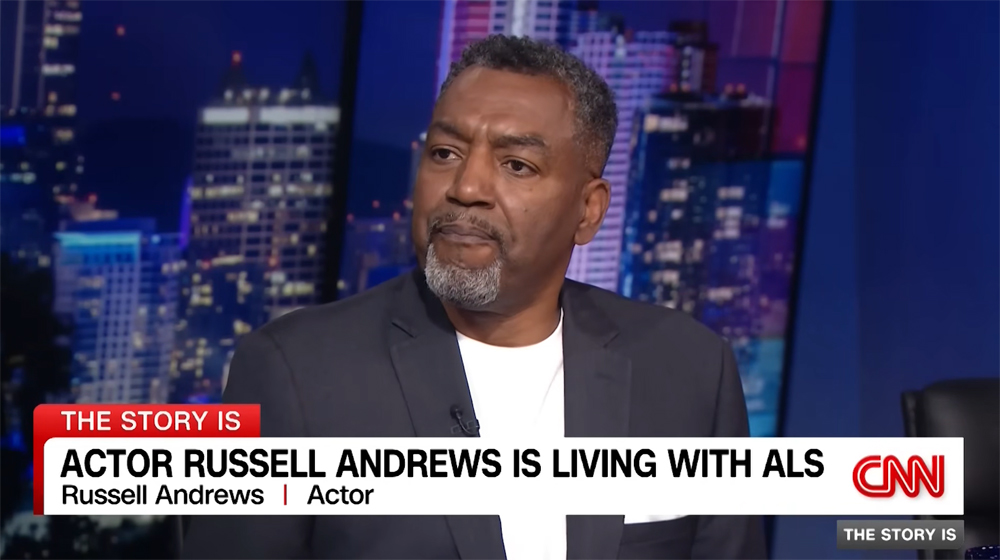
Russell Andrews, known for his work on Better Call Saul, has publicly disclosed that he has been diagnosed with ALS (Amyotrophic lateral sclerosis), a progressive nervous system disease affecting nerve cells in the brain and spinal cord that causes a loss of muscle control.
The 64-year-old actor made the announcement during an appearance on CNN's The Story Is with Elex Michaelson over the weekend, where he was accompanied by his fiancée, actress Erica Tazel.
"I am a person living with ALS," Andrews stated during the interview. "I was diagnosed in the late fall of last year."
Reflecting on his diagnosis, Andrews spoke about the emotional weight of the discovery while also expressing gratitude for the support system he has found. "And it's been humbling but there's… Elex, there's also something in the fact that I walked into a family of very caring people I did not know a year ago… the cliché family, but they have not let us miss a step in terms of care, the attention, the awareness and the ability to get me here today."
Andrews described the early signs that led to his diagnosis. He recalled experiencing what he initially thought might be a stroke during the pandemic, followed by twitching sensations he first attributed to pinched nerves in his neck. "It was a stressful time. We didn't work for three years, about, and then we had the back-to-back strikes and so a lot was going on," he explained.
As his condition progressed, Andrews noticed more pronounced symptoms. "I was not able to do things that I normally do…I was dropping cups and glasses at night. It felt like things were running up and down my arm at different times and it was the nerves," he shared.
Tazel added her perspective on observing the changes in Andrews. "The way he walked, there was just the subtle little things like that and I had questions. I was like, 'Something is definitely wrong,'" she said.
After consulting with his physician, Andrews was referred to a neurologist, who ultimately confirmed the diagnosis. "I was uncharacteristically calm and in a way, it was an answer to a lot of questions that we had," Andrews reflected on receiving the diagnosis.
ALS, which causes progressive muscle weakness, currently has no cure. While some patients live for extended periods, most individuals typically survive three to five years following their diagnosis.
Those interested in supporting research efforts can find more information and contribute at ALS.com.
Compare options